|

|
Romeo and Juliet
by William Shakespeare
|
|
In William
Shakespeare's Romeo and Juliet,
a long feud between the Montague and Capulet families disrupts the city of Verona and causes
tragic results for Romeo and Juliet. Revenge, love, and a secret marriage
force the young star-crossed lovers to grow up quickly — and fate causes them
to commit suicide in despair. Contrast and conflict are running themes
throughout Shakespeare's play, Romeo and
Juliet — one of the Bard's most popular romantic tragedies.
· History
of Shakespeare and Globe Theatre PowerPoint
· Globe
Theatre Video
|
|
|
|
|
Cast of Characters
|
|
Romeo Montague
|
|
|
|
|

|
Montague's son, who is loved and respected in Verona.
He is
initially presented as a comic lover, with his inflated declarations of love
for Rosaline. After meeting Juliet, he abandons his tendency to be a
traditional, fashionable lover, and his language becomes intense, reflecting
his genuine passion for Juliet. By avenging Mercutio's
death, he sets in motion a chain of tragic events that culminate in suicide
when he mistakenly believes Juliet to be dead.
|
|
|
|
|
Juliet Capulet
|
|
|
|
|

|
Capulet's
daughter.
She is presented as a young and innocent adolescent, not yet 14 years old.
Her youthfulness is stressed throughout the play to illustrate her
progression from adolescence to maturity and to emphasize her position as a
tragic heroine. Juliet's love for Romeo gives her the strength and courage to
defy her parents and face death twice.
|
|
|
|
|
Tybalt
|
|
|
|
|

|
Lady
Capulet's nephew and Juliet's cousin.
Tybalt is violent and hot-tempered, with a strong
sense of honor. He challenges Romeo to a duel in response to Romeo's
attending a Capulet party. His challenge to Romeo is taken up by Mercutio, whom Tybalt kills.
Romeo then kills Tybalt.
|
|
|
|
|
Mercutio
|
|
|
|
|

|
Kinsman to
the prince and friend of Romeo.
His name comes from the word mercury,
the element which indicates his quick temper. Mercutio
is bawdy, talkative, and tries to tease Romeo out of his melancholy frame of
mind. He accepts Tybalt's challenge to defend
Romeo's honor and is killed, thus precipitating Romeo's enraged reaction
during which Romeo kills Tybalt.
|
|
|
|
|
Benvolio
|
|
|
|
|

|
Best friend and cousin of Romeo.
His good sense and calm temperament are contrasted with the belligerence of
Romeo's other friend, Mercutio. In 2.1, knowing
that Romeo wishes to be alone, Benvolio draws Mercutio away. He attempts to prevent the brawl between
the servants in 1.1 and the fight between Mercutio
and Tybalt in 3.1; in both cases, he is
ineffectual. This courteous and gentle character (whose apt name means 'good
will') appropriately disappears from the play as the tragedy unfolds.
|
|
|
|
|
Friar Laurence
|
|
|
|
|

|
A brother
of the Franciscan order and Romeo's confessor; Advises both Romeo and Juliet.
The Friar agrees to marry the couple in secret in the hope that marriage will
restore peace between their families. His plans to reunite Juliet with Romeo
are thwarted by the influence of fate. The Friar concocts the potion plot
through which Juliet appears dead for 42 hours in order to avoid marrying Paris. At the end of
the play, the Prince recognizes the Friar's good intentions.
|
|
|
|
|
The Nurse
|
|
|
|
|

|
Juliet's
nursemaid, who acts as confidante and messenger for Romeo and Juliet.
Like Mercutio, the Nurse loves to talk and
reminisce, and her attitude toward love is bawdy. The Nurse is loving and
affectionate toward Juliet, but compromises her position of trust when she
advises Juliet to forget Romeo and comply with her parents' wishes and marry Paris.
|
|
|
|
|
Peter
|
|
|
|
|

|
A
servant in the Capulet household, the assistant of the Nurse.
(On the
left, with Romeo (middle) and Benvolio)
Peter appears with the Nurse in 2.4 and makes a brief speech that does two
things: establishes the level of immaturity in the gentlemen of Verona and displays
comical cowardice. His principal appearance is in 4.5, when the musicians are
given word of Juliet's apparent death. Peter demands free
music and engages them in a comic exchange, insulting them and playing
on their names.
|
|
|
|
|
Lord Capulet
|
|
|
|
|

|
Juliet's father, and head of
the family bearing his name, rivals to the Montague clan.
He is quick-tempered and impetuous but is initially reluctant to consent to
Juliet's marriage with Paris
because Juliet is so young. Later, he changes his mind and angrily demands
that Juliet obey his wishes. The deaths of Romeo and Juliet reconcile Capulet
and Montague.
His humorous involvement in the wedding preparations does not restore him to
our affections, nor does his cursory and somewhat stilted mourning when he
believes Juliet dead. Only at the end of the play, when his daughter is
actually dead, can we again find him humanly sympathetic.
|
|
|
|
|
Lady Capulet
|
|
|
|
|

|
Mother of Juliet and wife of Capulet.
Lady Capulet is vengeful and she demands Romeo's death for killing Tybalt. In her relationship with Juliet, she is cold and
distant, expecting Juliet to obey her father and marry Paris.
Lady Capulet is curt, imperious, and coldly unsympathetic to her daughter's
qualms, even without knowning that they stem from
her passion for Romeo; she is a representative of the conventional world that
opposes young lovers. Her grief in 4.5, when she believes Juliet is dead,
elicits our sympathy, but we may remember her enraged demands for revenge on Tybalt's murder.
|
|
|
|
|
Paris
|
|
|
|
|

|
A noble
young kinsman to the Prince.
Paris is
well-mannered and attractive and hopes to marry Juliet. Romeo fights and
kills Paris at the Capulet tomb when Paris thinks that Romeo
has come to desecrate the bodes of Tybalt and Juliet.
He is closely juxtaposed with Romeo throughout the play. Though no villain,
Paris is nonetheless an agent of the world that opposes the private universe
of the lovers, and this is indicated by the staid and predictable behavior
and speech. His sentiments are those of the conventionally poetic lover, the
type of lover Romeo was before he met Juliet.
In his final appearance, this well-meaning but vapid gentleman declares his
grief in a formal sestet that is reminiscent of Romeo's word play in Act I.
Paris honorably opposes Romeo, who he believes to be desecrating a tomb, but
dies without comprehending, or even seeing, his rival's passion.
|
|
|
|
|
Lord Montague
|
|
|
|
|
|
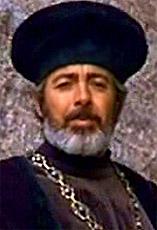
Romeo's father and head of the family bearing his name, rivals
to the Capulet clan.
Montague appears only briefly, in the three scenes in which the feud with the
Capulets erupts into violence, and on each occasion
he accepts in conventional terms the objections of the Prince to the
fighting. In the final scene of reconciliation, he offers to commission a
golden statue of Juliet as a public memorial to the love that the feud has
doomed.
|
|
|
|
|
Lady Montague
|
|
|
|
|
|
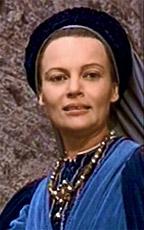
Mother of Romeo and wife of Montague.
Lady Montague appears only twice, beside her husband, and speaks only one
line. In 5.3, she is said to have died of grief following Romeo's banishment.
|
|
|
|
|
Balthasar
|
|
|
|
|

|
Balthasar is a servant to
Romeo.
He brings Romeo the erroneous news that Juliet is dead,
triggering the last phase of the tragedy. Balthasar
accompanies Romeo to the tomb, but Romeo sends him away with a letter to
Montague, but, concerned about his master, he stays to observe him.
At the end of the play, he gives the Prince the letter, which helps to
explain the tragedy to the lovers' parents.
Balthasar is one of the only servants' of the Montagues in the play who partakes in the brawl. He is
conventionally designated as the companion.
|
|
|
|
|
Prince Escalus
|
|
|
|
|

|
The ruler of Verona.
The Prince is a representative of civil order, an important ideal for
Shakespeare. The prince appears three times in the play, first describing the
feud between Montague and Capulet; next, banishing Romeo, thereby
precipitating the climax of the play; rather too late, he states a principle
of statecraft that has been too little observed in Verona: "Mercy but murders, pardoning
those that kill..." (3.1.199). At the close he summarizes the fateful
resolution of the feud, accepting blame "for winking at...discords"
(5.3.293). This acknowledgment of the state's responsibility for order
reflects the playwright's interest in the civic as well as the purely
personal ramifications of tragedy. This theme recurs throughout Shakespeare's
works.
|
|
|
|
|
Rosaline
|
|
|
|
|

|
Character mentioned in the play but does not actually appear
in production.
(Movie version only: on the right, with friends)
She is the object of Romeo's infatuation before he meets Juliet. Early in the
play, Romeo asserts his love for the apparently indifferent Rosaline in
immature, self-consciously poetic terms. The episode emphasizes by contrast
the depth of Romeo's passion for Juliet when it develops.
|
|
|
|
|
Play Summary
|
|
Day 1 — Sunday:
Act I, Scene 1–Act II, Scene 2
|
As the play begins, a long-standing feud between the Montague
and Capulet families continues to disrupt the peace of Verona,
a city in northern Italy.
A brawl between the servants of the feuding households prompts the Prince to
threaten both sides to keep the peace on pain of death.
Benvolio advises his lovesick friend Romeo, (son of
Montague), to abandon his unrequited love for Rosaline and seek another.
That night, Capulet holds a masked ball to encourage a courtship between his
daughter, Juliet, and Paris, a relative of the Prince. Concealing their identities
behind masks, Romeo and Benvolio go to the ball,
where Romeo and Juliet fall in love at first sight, but at the end of the
evening discover their identities as members of the opposed families. On his
way home from the feast, Romeo climbs into Capulet's orchard to glimpse
Juliet again. Juliet appears at her balcony and the couple exchange vows of
love, agreeing to marry the next day.
|
|
Day 2 — Monday:
Act II, Scene 3–Act III, Scene 4
|
Romeo asks Friar Laurence to perform the marriage ceremony.
Though initially reluctant, he finally agrees, hoping to reconcile the
families, and marries Romeo and Juliet that afternoon.
Meanwhile, Tybalt, Juliet's cousin, sends Romeo a
challenge to a duel. Romeo refuses to fight when Tybalt
confronts him because they're now related. However, Mercutio,
Romeo's quick-tempered friend, intervenes and accepts the challenge. Romeo
tries to part the other two as they fight, but Mercutio
is fatally wounded under Romeo's arm. To avenge Mercutio's
death, Romeo kills Tybalt and then flees.
The Prince announces Romeo's banishment for Tybalt's
murder. Romeo, in hiding at the Friar's cell, becomes hysterical at the news
of his sentence and tries to kill himself, but the Friar promises to make
Romeo's marriage to Juliet public and gain the Prince's pardon. Romeo and
Juliet celebrate their wedding night before he leaves at dawn for Mantua.
|
|
Day 3 — Tuesday:
Act III, Scene 5–Act IV, Scene 3
|
That morning, Juliet discovers that her father has
arranged for her to marry Paris
on Thursday. The Capulets, unaware that Juliet is
grieving for Romeo's exile rather than Tybalt's
death, believe the wedding will distract her from mourning. Distressed at the
prospect of a false marriage and isolated from her family, Juliet seeks
advice from Friar Laurence, who offers her a sleeping potion to make her
appear dead for 42 hours. During this time, the Friar will send a message to
Romeo in Mantua so that Romeo can return to Verona in time for
Juliet to awake.
Juliet returns home and agrees to marry Paris.
In a moment of euphoria, Capulet brings the wedding forward from Thursday to
Wednesday, thereby forcing Juliet to take the potion that night and reducing
the time for the message to reach Romeo.
|
|
Day 4 — Wednesday:
Act IV, Scene 4–Act V, Scene 2
|
Early on Wednesday morning, Juliet's seemingly lifeless
body is discovered and she is placed in the family tomb. Because an outbreak
of the plague prevents the Friar's messenger from leaving Verona, Romeo now receives news of Juliet's
death instead. Desperate, Romeo buys poison from an apothecary and returns to
Verona.
Late that night, Romeo enters the Capulet tomb, but is confronted by Paris,
whom he fights and kills.
Still unaware that Juliet is in fact alive, Romeo takes the poison and dies.
The Friar, arriving too late, discovers the bodies as Juliet begins to stir.
He begs her to leave with him, but Juliet refuses, and then stabs herself
with Romeo's dagger.
|
|
Day 5 — Thursday:
Act V, Scene 3
|
As dawn breaks, the Watch arrives, closely followed by the
Prince, who demands a full inquiry into what has happened. The two families
then arrive, and the Friar comes forward to explain the tragic sequence of
events. The deaths of Romeo and Juliet finally bring the feud to an end as
Montague and Capulet join hands in peace.
|
|
Questions
|
|
1)
Love manifests
itself in a multitude of ways in the play. Compare and contrast Romeo's love
for Rosaline with Romeo's love for Juliet. Consider love as it exists in the
Capulet household. How does love operate between Lord and Lady Capulet,
Juliet, the Nurse, and Tybalt?
2)
Some readers
consider the final scene in which both Romeo and Juliet die to be triumphant.
In addition to the families being reconciled, how is the final scene
triumphant?
3)
Consider Lord
Capulet's personality. How do his moods change and why? How does these mood
swings affect Juliet, and how do they affect the course of the play?
4)
Compare and contrast
Romeo's reaction to the news of his banishment with Juliet's reaction.
5)
Examine the role of Escalus, the Prince, as the play's figure of authority.
How far is he to blame for what happens?
6)
Some critics have
said that Shakespeare had to kill Mercutio as he
was becoming such a compelling characters that he
detracted from Romeo and Juliet. Do you agree? Why or why not?
7)
Light in its various
forms recurrs throughout the play. How does light
mirror the action? How does the author use light to describe the characters
and the changes they undergo?
8)
As the Friar picks
his herbs, he tells us that nature's tomb is also her womb and that what dies
gives birth to new life. How do the Friar's words anticipate upcoming events?
Do you think that the Friar proactively creates events that follow, or does
he react to situations that are beyond his control? Explain.
9)
Juliet is a very
young girl; however, she shoulders a great deal of responsibility and manages
a series of very difficult situations. Discuss Juliet's maturity level and
compare it to Romeo's. Compare Juliet early in the play with Juliet later in
the play. How has she changed? When did she change? Why did those changes
occur?
10) The first Prologue describes Romeo and Juliet as,
"A pair of star-cross'd lovers." Examine
the way Shakespeare uses cosmic imagery in the play to emphasize the
connection between Romeo and Juliet and their tragic deaths.
11) Shakespeare makes the plot of Romeo and Juliet rely on the delivery
of crucial messages. Explain the importance of these various messages and the
problems with the messengers.
12) Dreams often play an important part in Shakespearean
dramas. At several points in the play, the characters have dreams. Sometimes
they interpret them correctly, and other times they don't. Discuss these
instances and how the characters' reactions to those dreams affect the action
in the play. How do the characters interpret or misinterpret their dreams?
13) The feud between the families seems to be an
ever-present concern for the characters. How does the feud drive the action
of the play. How do the various characters manifest
the feud?
|
|
|
|
|
On-lineText
Romeo and Juliet
|
Study Guides
http://www.lifestreamcenter.net/DrB/Lessons/RomJul/index.htm
http://www.wsu.edu/~brians/love-in-the-arts/romeo.html
http://absoluteshakespeare.com/guides/romeo_and_juliet/romeo_and_juliet.htm
http://www.enotes.com/romeo/introduction
http://www.bellmore-merrick.k12.ny.us/romjul.html
http://nfs.sparknotes.com/romeojuliet/
|
|
|
|
|
|
|